Outback Heating of Vriginia, Inc.

  • Home
  • Products
    • Grasshopper
      • 200 Series
      • 300 Series
      • 400 Series
      • 600 Series
      • 700 Series
      • 900 Series
      • Implements
    • Heatmor Furnaces
      • X-Series/EPA
      • Residential
      • Pellet Burner
      • Commercial Furnaces
      • Dual-fuel Furnaces
      • Outdoor Furnace Insulated Pipe
    • Husqvarna
      • Lawn Care
      • Grounds Care
      • Forrest Care
      • Snow Care
    • Spartan
      • RZ Series
      • RT series
      • SRT Series
  • Request a Brochure
  • Specials
  • Shows and Events
  • About Us
    • Testimonials
  • Contact
  • Online Store

We've got you covered

  • Become A Dealer
  • Blog
  • How-To Videos
  • Commercials
  • (540) 337-9600 / (800) 743-5883
    • Facebook
    • YouTube

Homeowner’s Guide To Preparing Your Lawn Mower For Spring Use

January 15, 2018

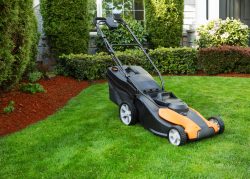
lawn mowerEven though winter is still in full swing, it won’t be long before all the snow melts and homeowners prepare to exchange their snowblowers for lawn mowers. However, proper pre-season lawn mower maintenance is essential to ensuring that your mower runs properly all season long. Here are just a few quick tips to keep in mind when preparing your lawn mower for spring.

Remove Debris
First, remove the belt guards on your mower and thoroughly clean out any dirt, grass clippings, or other debris. This buildup can significantly hinder the lifespan of your mower and make it work harder than it has to in order to achieve the same result. Instead of leaving it to damage pulleys and other necessary components of your mower, use an air compressor or even a leaf blower to eliminate any and all debris before it becomes a major problem. Experts say this step should be completed at least once every third mowing, but if your yard is bigger, your mower may need to be cleaned more often.

Check Fuel Filters
If your mower’s fuel filters are too worn down, you’re already losing out on fuel economy. They can also make the mower more difficult to start. Refer to your mower’s manufacturer instructions to know how often you should be replacing the fuel filters.

Fill With New Gas
Having fresh gas helps your mower run as smoothly as possible. Experts say that any gas stored for more than 30 days may cause starting problems with your mower. To avoid this, it’s best to empty any remaining gas prior to storing your mower for the winter and refill with fresh fuel when preparing it for spring.

Sharpen Blades
Finally, in order to maximize your mower’s efficiency, sharpening the blades is always a good idea. Inspect them to check for dullness; you’ll also be able to tell by how the mower is cutting grass. Dull blades will tear grass instead of slicing it cleanly. You can also refer to a professional to assist with mower blade sharpening.

Ultimately, the average American spends, on average, four hours per week taking care of their lawn. That adds up to an average of 208 hours per year, or over eight days. Keeping these tips in mind can help you maintain your lawn with a lawn mower that does the job right.
Filed Under: Blog

Common Outdoor Furnace Mistakes (And How To Avoid Them): Part 2

December 18, 2017

In the last post, we discussed some of the most common issues people typically have with outdoor furnaces. And even though residential furnaces including outdoor models are useful with proper care, being aware of the most common issues and how to prevent them is the best way to maximize your outdoor or residential furnaces’ lifespan. Here’s part two of our guide that will explore some of the most common issues with outdoor furnaces and how you can be proactive and avoid them altogether.

Understimating Physical Effort Required For Maintenance
This is more of a user error than an error with the furnace itself, but it still needs to be addressed. It’s important to be aware that outdoor furnaces, albeit useful, require quite a bit of maintenance in order to work their best. As mentioned in part one of our guide, the amount of maintenance is highly dependent on the temperature and climate of the area. Warmer temperatures are easier to maintain, while colder temperatures may require the operator to go out and reload the wood up to three times each day.

Plus, if your outdoor furnace happens to be your only heat source, you’ll have to find someone to keep up with maintenance to prevent freezing pipes if you plan on leaving home during the winter for more than a few days at a time. Make sure you can keep up with these tasks as well as add water to the boiler before you decide whether it’s the right type of furnace for you.

Not Having Sufficient Resources
Finally, another issue arises when people run out of resources. Making sure you have a sufficient and consistent supply of wood before you even think about getting an outdoor wood furnace is essential. Though useful, they aren’t always efficient with wood consumption and can require as much as 10 cords of wood as well as a reliable place to protect it from the elements. However, as a whole, outdoor furnaces are a cost-effective source of heating energy. Owners who cut their own wood, or can obtain free wood as fuel, can entirely eliminate their heating bills. Over a 10-year period, a homeowner or business may save $10,000 to $50,000 or more on heating costs.

Ultimately, outdoor furnaces are exceedingly useful in that they’re often used to heat garages, farm buildings, and other outbuildings. Their fuel — wood — is readily available in many rural areas. That being said, it’s important to be aware of the maintenance they truly require, which includes knowing about these potentially problematic issues and how to avoid them. For more information about outdoor and residential furnaces, contact Outback Heating of Virginia Inc.

Filed Under: Blog

Common Outdoor Furnace Mistakes (And How To Avoid Them): Part 1

December 14, 2017

Currently, there are approximately 200,000 outdoor wood furnaces in use. They’re one of the most popular types of residential furnaces because they’re reliable and extremely effective. That being said, it’s easy for problems to arise without proper maintenance and care. Here’s part one of our guide exploring some of the most common outdoor residential furnace issues and how to prevent them.

Excess Smoke
Some homes that use outdoor residential furnaces have noticed that excess smoke can pose an issue during certain times of year, certain conditions, and certain areas. Another factor that can contribute to excess smoke is the type of wood that’s being burned. Experts say that there’s minimal smoke associated with using your outdoor furnace in cold temperatures when you’re burning seasoned hardwood. With this in mind, outdoor furnaces aren’t designed for use in dense residential areas. They should also be placed downwind from the home and out of the way from any neighbors.

Unrealistic Expectations
The second mistake that comes into play when installing and using your outdoor furnace is not knowing what to expect as far as level of heat. The problem occurs because many manufacturers say that their furnaces should be placed 500 feet away from a dwelling, but abiding by these standards means that significant heat loss will occur due to the long distance it has to travel through the underground piping system.

Similarly, many manufacturers claim that their units can operate for up to a full 96 hours without needing to be reloaded. While these numbers may be accurate during the hot summer months when you only need to heat water, they aren’t accurate during the cold season, when they need to be loaded daily. Having clear expectations for your outdoor wood furnace can help you use it to its best potential.

Ultimately, being aware of these common problems with outdoor furnaces can help you to prevent them from happening and/or solve the issue as soon as it arises. Keep an eye out for our next post, where we’ll reveal some more outdoor furnace mistakes to avoid.

Filed Under: Blog

Exploring Common Lawn Mower Maintenance Mistakes: Part 2

November 10, 2017

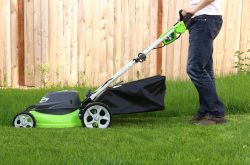
lawn mowerIn the last post, we discussed some of the most common lawn mower maintenance mistakes and how to avoid them. Proper maintenance is critical for preserving both the lifespan of your lawn beautification equipment and the quality of your lawn care regimen. Here’s part two of our guide to avoiding some of the most common lawn mower maintenance mistakes.
Using Low-Quality Fuel
Lawn mowers are each different in the type of fuel that helps them operate best. However, improper gas storage and usage can result in a rusted gas tank and lower lifespan. Your lawn mower’s gas should always be stored in a cool, dry place in an airtight container. Alcohol within the gas can also pose an issue, as excess alcohol can draw water through your lawn mower’s vents and flood the gas tank. Experts generally recommend using alcohol-free fuel whenever possible. It’s also always a good idea to consult the owner’s manual for tips regarding proper fuel and gas tank maintenance.

Neglecting Tire Pressure
Neglecting the tire pressure of your lawn mower is a mistake that countless people make. However, tire pressure is actually one of the most common maintenance issues with lawn mowers of all kinds. Improper tire pressure can result in a number of prolonged issues. Most importantly, it affects the overall integrity of the cutting job. You may also find that your lawn mower is harder to steer with low tire pressure. If you notice that your lawn mower’s deck is uneven, tire pressure should be one of the first places to check.

Not Knowing When To Seek Professional Help
As you can see, mower maintenance can be quite the handful for inexperienced mowers. There’s absolutely no shame in calling a professional to perform full maintenance on any of your lawn equipment to ensure that it’s working at it’s best and providing the best cut possible.

A recent survey by Harris Poll for the National Association of Landscape Professionals found that three-quarters of Americans feel it is important to spend time outside in their yards, and avoiding these lawn mower maintenance mistakes can help you and your family make the most of all that your well-maintained yard has to offer. For more information about lawn mowers, contact Outback Heating of Virginia, Inc.

Filed Under: Blog

Exploring Common Lawn Mower Maintenance Mistakes: Part 1

November 8, 2017

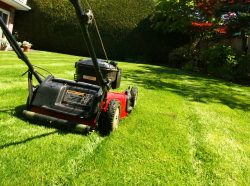
lawnWhen it comes to lawn mower maintenance, you can never be too careful. Without sufficient knowledge to care for your lawn beautification equipment, its lifespan can drop significantly. Unfortunately, there are a number of common mistakes people make when caring for their lawn mowers. Here are just a few lawn mower maintenance mistakes to avoid.
Neglecting Blade Sharpness
Many people think that their lawn mower’s blades don’t need any maintenance whatsoever and will always remain sharp enough to cut grass. The average American spends, on average, four hours per week taking care of their lawn, and experts say that your mower’s blades should be sharpened at least three times a year, depending on how often you use your mower. Without a sharp blade, your mower will rip and tear through grass instead of providing a clean cut. If you cut your lawn and see white streaks left behind, a dull blade is the most common culprit. Grass that is ripped or torn instead of cleanly cut is also more prone to diseases, so take the time to keep your mower’s blades sharp.

Improper Mower Storage
Another common mistake people make when storing their mowers is making the assumption that as long as the mower is sheltered from the elements, it’s thoroughly protected. It may sound surprising, but there has been an increasing number of rodent problems around the country in the past several years, and it’s not the least bit uncommon for these critters to make their way into the inner workings of your mower or other lawn equipment. Mice, for example, are known to chew through wires and coils and can significantly compromise your mower’s integrity and mowing ability. Not only will you have to spend money on potentially expensive replacement parts, but you’ll have to take further action to prevent another rodent infestation. Be proactive about where and how you’re storing your mower and do all that you can to keep mice and other rodents from accessing it.

Ultimately, being aware of these major mower maintenance mistakes can help you keep your lawn mower in optimal condition for years to come. Keep an eye out for the next post, where we’ll discuss even more maintenance mistakes that compromise mower quality and lifespan.

Filed Under: Blog

A Step-By-Step Guide To Testing Your Residential Furnace

October 4, 2017

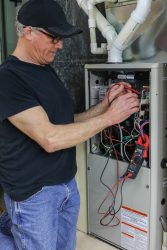
residential furnaceIt’s the first chilly day of the season and you fire up your furnace to warm up your home.

And you realize it’s not working.

A faulty residential furnace can be frustrating, since it leaves your home uncomfortable to be in. Fortunately, there are steps you can take to test these types of furnaces before calling a professional for an inspection.

Step 1: Check the power connection.
Sometimes when your furnace sits idle for months at a time, it is common for the power switch to flip off. Find the switch and see if this is the case. You may find that the electric connection is the problem. Some homes have gas residential furnaces, so check the fuel supplies and connection.

Step 2: Look at your thermostat.
The thermostat may also be the problem. Check that it is set to the heating setting and that it is set at the right temperature. You may have set the temperature too low for the furnace to actually start.

Step 3: Inspect the furnace filter.
If your furnace does turn on but is not producing enough heat or is blowing weakly, the filter may be clogged. Either change it yourself or call a professional to change it for you. Placing the clean one back in should allow the furnace to function at full capacity.

Step 4: Reset the unit.
Some residential boilers, air conditioning units, and furnaces have reset buttons. Check whether your furnace has one, and hold down the button to let the system restart. Sometimes the system just needs an extra nudge after not running for several months.

Step 5: Inspect for physical damage.
While it might be obvious, furnaces often don’t work because of actual physical damage. Inspect the various parts and look for cracks, missing parts, and other issues. This is especially important following a flood or other natural event.

Step 6: Call a furnace professional.
No matter the results of the above steps, it’s always essential to call an HVAC professional. They can pinpoint the root cause of your heating issues and recommend replacement or repair.

The HVAC professional may also offer a different heating solution for your home. For example, outdoor wood furnaces are a popular option, with about 200,000 in use. You can work with the technician to craft the perfect HVAC package for you.

Filed Under: Blog

  • « Previous Page
  • 1
  • 2
  • 3
  • 4
  • 5
  • …
  • 9
  • Next Page »

Our Location:

Outback Heating of Virginia, Inc.
89 Arrow Lane
Stuarts Draft, VA 24477
United States

(540) 337-9600
(800) 743-5883

Hours

Monday – Friday: 9 am – 5 pm

Saturday: 9 am – 1 pm

Blog
  • Facebook
  • YouTube
  • Home
  • Products
    • Grasshopper
      • 200 Series
      • 300 Series
      • 400 Series
      • 600 Series
      • 700 Series
      • 900 Series
      • Implements
    • Heatmor Furnaces
      • X-Series/EPA
      • Residential
      • Pellet Burner
      • Commercial Furnaces
      • Dual-fuel Furnaces
      • Outdoor Furnace Insulated Pipe
    • Husqvarna
      • Lawn Care
      • Grounds Care
      • Forrest Care
      • Snow Care
    • Spartan
      • RZ Series
      • RT series
      • SRT Series
  • Request a Brochure
  • Specials
  • Shows and Events
  • About Us
    • Testimonials
  • Contact
  • Online Store
Copyright © 2026 ยท Outback Heating Inc, LLC
Powered by LocalX